If your water leaves orange or reddish stains in sinks, tubs, and toilets, has a metallic taste, or causes laundry to come out discolored, iron in your water supply is likely the cause. It’s a problem that affects more households than most people realize, and it tends to get worse over time if nothing is done about it. For Menlo Park homeowners dealing with these symptoms, understanding what’s causing them and when iron filter installation becomes necessary is the first step toward actually solving the problem.
Why Iron in Water Is More Common Than You Might Think
Iron occurs naturally in soil and rock, and groundwater picks it up as it moves through the ground. Even treated municipal water can contain trace amounts of iron, and private well water in the Bay Area is particularly prone to elevated iron levels depending on the local geology.
Menlo Park sits in an area where both municipal and private water sources can carry iron content. The region’s soil composition and the depth of local aquifers contribute to iron levels that, in some cases, exceed what most homeowners expect from a suburban water supply. The age of the plumbing is also a factor. Homes with older iron or steel pipes can introduce additional iron into the water supply through internal corrosion, meaning the source of the problem isn’t always the water coming in but the pipes it travels through.
The Different Forms of Iron in Water
Understanding the type of iron in your water matters because different forms require different treatment approaches.
Ferrous Iron
Ferrous iron, sometimes called clear water iron, is dissolved in the water and invisible to the naked eye. The water looks clear when it comes out of the tap, but when it contacts air or surfaces, the iron oxidizes and leaves behind those characteristic reddish-brown stains. This is the most common form of iron found in residential water supplies.
Ferric Iron
Ferric iron is already oxidized and appears as visible reddish or orange particles suspended in the water. If your water looks cloudy, reddish or has visible sediment, ferric iron is likely present. This form is easier to detect visually but still requires proper filtration to remove effectively.
Bacterial Iron
Iron bacteria are microorganisms that feed on iron and create a slimy, reddish-brown buildup inside pipes, water heaters, and fixtures. This form is less common but more problematic. It can clog pipes and fixtures, create unpleasant odors, and is harder to treat than dissolved or particulate iron. If you notice a slimy residue in your toilet tank or a swampy smell from your water, bacterial iron may be involved.
Signs That Iron Filter Installation Has Become Necessary
There’s a difference between having trace iron in your water and having a level that warrants dedicated filtration. Here are the signs that the situation has crossed that threshold in your Menlo Park home.
Persistent Staining on Fixtures and Surfaces
Reddish, orange, or brown stains in sinks, tubs, toilets, and around faucet bases that return quickly after cleaning are one of the clearest signs of elevated iron. These stains are iron oxide deposits left behind as water evaporates or contacts surfaces. If you’re cleaning them regularly and they keep coming back within days, the iron concentration in your water is high enough that a filter is the only lasting solution.
Discolored Laundry
Iron in the wash water can leave orange or brownish streaks on light-colored fabrics that are difficult or impossible to remove. If your whites are coming out of the washing machine with a yellowish or rust-colored tinge, your water is affecting your laundry. This kind of staining also accelerates fabric wear over time.
Metallic Taste or Odor
A noticeable metallic taste in drinking water or a smell that resembles rust or old pipes is a direct indication of elevated iron. While small amounts of iron aren’t considered a health hazard, water with a strong metallic taste or odor isn’t pleasant to drink or cook with, and the concentration that produces these sensory effects is typically high enough to cause the other problems described here.
Scale and Buildup in Appliances
Iron deposits accumulate inside water heaters, dishwashers, coffee makers, and any other appliance that uses water. This buildup reduces efficiency, shortens appliance lifespan, and can affect the taste and quality of food and beverages prepared with the water. If you’re seeing reddish residue inside your dishwasher or coffee maker, iron is getting through your current water supply unfiltered.
Reduced Water Pressure
In more advanced cases, iron deposits can accumulate inside pipes to the point of restricting flow, similar to the way mineral scale from hard water narrows pipe interiors. If you’re dealing with gradual pressure reduction alongside visible iron staining, the buildup may already be affecting your plumbing system. A low water pressure repair assessment can help determine whether iron accumulation is contributing to the problem.
What Iron Filter Installation Involves
Iron filter installation is a point-of-entry treatment, meaning the filter is installed where the main water line enters the home so that all water throughout the house is treated before it reaches any fixture or appliance.
The specific type of filter system recommended depends on the form of iron present, the concentration level, and whether other water quality issues like hardness or manganese are also present. Common iron filtration approaches include oxidizing filters, which convert dissolved ferrous iron to filterable ferric iron before capturing it, and catalytic carbon filters, which handle both iron and hydrogen sulfide. Some systems use air injection to oxidize iron before filtration.
A water quality analysis is the right starting point before selecting a filtration system. Testing identifies not just the iron level but also the specific form it takes and any other factors in your water chemistry that affect which treatment approach will work best. Installing the wrong type of filter for your specific iron problem is a common mistake that results in a system that underperforms or requires premature replacement.
How Iron Filtration Works Alongside Other Water Treatment
Iron filtration is often part of a broader water treatment setup rather than a standalone solution. Many Menlo Park households dealing with iron also have hard water, which means a water softener is part of the picture as well. The relationship between the two systems matters because water softeners can handle low levels of ferrous iron, but are not designed for high iron concentrations and can be damaged by iron over time if used as the primary treatment.
The typical approach is to install the iron filter upstream of the water softener so that iron is removed before the water reaches the softener’s resin bed. This protects the softener, extends its service life, and ensures that each system is doing the job it’s designed to do.
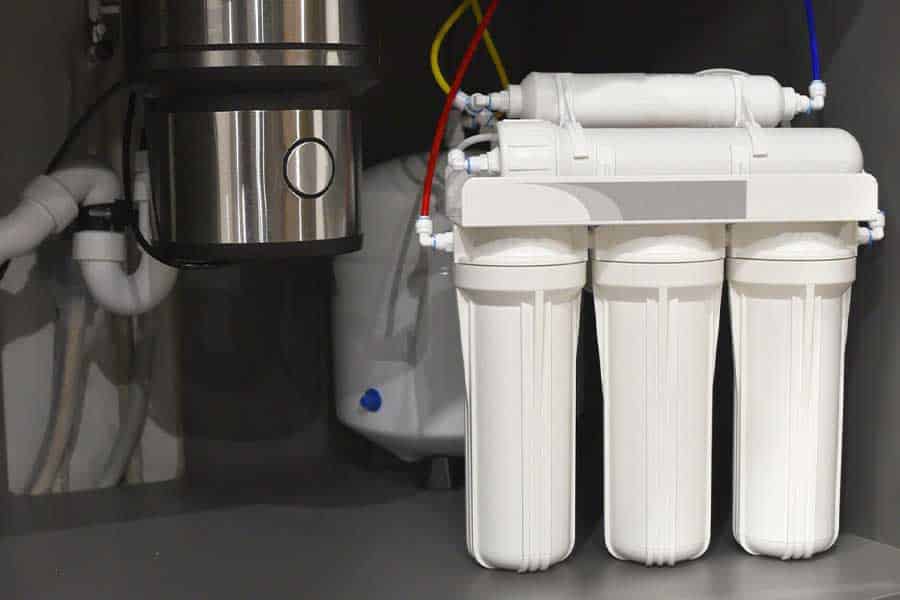
For households concerned about drinking water quality beyond iron removal, pairing an iron filter and water softener with a reverse osmosis system at the kitchen sink provides comprehensive treatment. The iron filter and softener protect the plumbing and appliances throughout the home, while the reverse osmosis system delivers the highest quality water specifically for drinking and cooking.
The Consequences of Leaving Iron Untreated
It’s worth being direct about what happens when elevated iron levels go unaddressed. The staining and taste issues are the most visible effects, but the plumbing and appliance damage that accumulates over time is the more costly consequence.
Iron deposits inside pipes reduce flow and create surface irregularities that accelerate further buildup. Water heaters that run on iron-laden water accumulate deposits that insulate the heating element and drive up energy costs while shortening the unit’s useful life. Dishwashers, washing machines, and other appliances wear faster and perform less efficiently. The cumulative cost of ignoring an iron problem over several years typically far exceeds the cost of proper filtration.
If your home already has visible signs of iron damage inside fixtures or you suspect buildup in your pipes, a plumbing inspection alongside water testing gives you a complete picture of both the water quality issue and the current state of your plumbing system.
When to Act
If you’re recognizing the signs described here in your Menlo Park home, the practical answer is to act sooner rather than later. Iron problems don’t improve on their own, and the damage to fixtures, appliances, and plumbing accumulates steadily. Testing your water first gives you the specific information needed to select the right filtration system and ensures you’re solving the actual problem rather than guessing at it.
Protect Your Home’s Water Quality with Works Plumbing
Works Plumbing helps Menlo Park homeowners identify iron and other water quality issues and install filtration systems that genuinely address what’s in their water. If you’re dealing with staining, metallic taste, or other signs of iron in your supply, call us today or book online to schedule your water quality test and find out what the right solution looks like for your home.