The plumbing warning signs you should never ignore are slow or gurgling drains, sewer smells, water stains on walls or ceilings, a sudden rise in your water bill, low water pressure, discolored water, and no hot water or a leaking water heater. Each one means something is failing, and each gets more expensive to fix the longer it runs. Here is what each sign means, what you can check yourself, and when to call a plumber.
1. Slow drains or gurgling sounds
One slow sink is usually a local clog in the trap or the pipe right behind it. A gurgling drain is different. Gurgling means air is being pulled through the water in a trap, which happens when a drain line is partly blocked or the vent is not working.
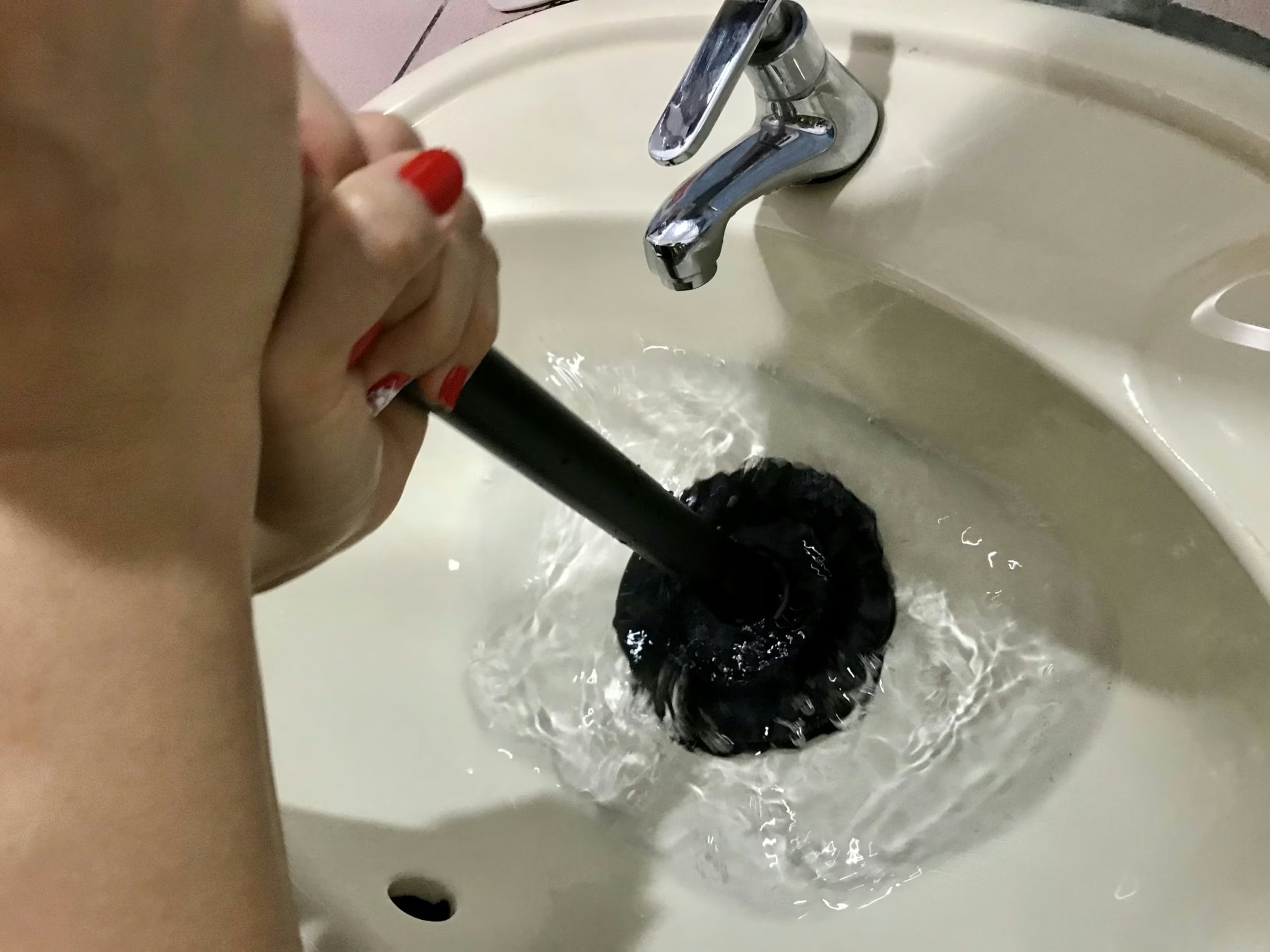
- Safe to try: a plunger, or removing and cleaning the sink trap.
- Call a plumber if: more than one fixture drains slowly, a toilet gurgles when you run the shower, or water backs up in a tub or floor drain. That points to the main drain or sewer line. Our drain cleaning and camera inspection services find the cause without guessing.
Skip chemical drain cleaners. They can damage older pipes and are a hazard to anyone who has to work on the drain afterward.
2. Sewer smells
A rotten egg or sewage odor inside the house should not be ignored. The cause can be as simple as a dry floor drain or an unused sink whose trap water has evaporated. Run water down it for a minute. If the smell stays, it can mean a cracked sewer line, a failed vent or a damaged trap.
If you smell sewage along with slow drains in several rooms, the main sewer line may be partly blocked. If you smell natural gas, which smells like sulfur or rotten eggs, leave the house and call your gas utility from outside.
3. Water stains, damp spots or bubbling paint
Stains on a ceiling, a soft spot in a wall, bubbling paint or warped flooring all point to water where it should not be. The source can be a pipe, a fixture seal, the roof or condensation, and a plumber can tell which.
Moisture also grows mold. The EPA advises drying water-damaged areas and items within 24 to 48 hours to prevent mold growth (EPA, A Brief Guide to Mold, Moisture and Your Home). If a stain keeps growing or comes back after drying, leak detection can locate a leak behind the wall without opening it up.
4. A water bill that climbs for no reason
A jump in your bill with no change in how you live is a classic sign of a hidden leak. The EPA says the average household’s leaks waste more than 9,300 gallons of water every year, and that about 9 percent of homes have leaks that waste 50 gallons or more per day (EPA WaterSense, Fix a Leak Week).
To check, turn off everything that uses water, read the meter, wait two hours without using water, and read it again. If the number changed, water is going somewhere. A toilet that runs on its own is a frequent culprit, but a leak in a buried line or under a slab is also possible. See slab leak repair if a leak is suspected under the floor.
To test a toilet, put a few drops of food coloring in the tank and do not flush. If color shows up in the bowl within 15 minutes, the flapper is leaking. A new flapper is an easy DIY fix. If the toilet is fine and the meter still moves, the leak is elsewhere and it is time for a professional.
5. Low water pressure
Low pressure at one faucet is usually a clogged aerator or a worn cartridge. Low pressure across the whole house is a bigger issue. Possible causes include a partly closed main valve, a failing pressure regulator, a leak in the supply line, or old galvanized pipes narrowed by rust and mineral scale from the inside.
Check the aerator first. Unscrew it, rinse out the debris and reinstall it. If pressure is low everywhere, or only the hot water is weak, call a plumber. Many Peninsula homes built in the mid 1900s still have galvanized pipe that restricts flow as it ages. When pipes are this far gone, repiping is a better fix than repeated repairs.
6. Discolored or odd-smelling water
Brown or orange water that clears after a minute can mean rust in old pipes, or sediment stirred up by work on the water main nearby. If only the hot water is rusty, the water heater tank may be corroding. Water that stays discolored, or smells of chemicals or sulfur, needs attention. Call your water provider if all your neighbors have the same problem. Call a plumber if it is only your house.
7. No hot water, or a leaking or noisy water heater
Lukewarm water, rumbling or popping noises, rust at the drain valve and water pooling around the tank are all signs of a water heater near the end of its life. A tank that is leaking from the body cannot be repaired. Turn off the water supply to the heater and the gas or power, then call for service. See water heater repair for what we can fix and when replacement makes more sense.
How to decide what to do
Ask two questions. Is water or sewage actively damaging the house? Is there any risk to safety, such as gas, electricity or standing water? If either answer is yes, shut off the water or leave the area and call right away. If not, write down what you see, check the simple causes above, and book a visit within the week.
Warning signs that need a call right now
- Water flowing that you cannot stop, or a burst pipe. Shut off the main valve first.
- Sewage backing up into tubs, showers or floor drains.
- A gas smell. Leave the house, then call the gas utility.
- Water near the electrical panel or outlets.
- No water at all with no outage in the area.
Why Peninsula homes show these signs
Older housing stock and coastal air both play a role here. Many homes in Pacifica, San Francisco, Daly City and San Mateo County have decades-old pipes, including galvanized steel and cast iron drains. Fog and salt air near the coast speed corrosion on exposed fittings, shutoff valves and water heaters. Regular checks under sinks and around the water heater are cheap insurance.
Frequently asked questions
Which plumbing problems cannot wait?
Active leaks, sewage backups, no water, and anything involving gas. Slow drains and small drips can wait a few days, but should not wait months.
How often should I have my plumbing inspected?
A yearly look at visible pipes, valves and the water heater is a good habit. Older homes benefit from a professional inspection, especially before buying or after repeated problems.
Is a dripping faucet a real warning sign?
It is a minor one. The EPA says a faucet that drips once a second can waste more than 3,000 gallons a year, so it is worth a small repair. See our faucet repair page.
Getting help from Works Plumbing
Works Plumbing and Rooter, Inc. is a family owned, licensed California contractor (CSLB #982663) serving the Peninsula since 2009, with offices in Pacifica, San Francisco and Burlingame. We are open 24/7 and offer same-day service. Call 650-899-3542 or contact us online to schedule a visit.


 Licensed & Insured · CA LIC #982663
 Open 24/7 · Mon-Sun
 Pacifica, San Francisco, Burlingame, CA · Serving the Bay






 TAP TO CALL • 24/7