You can clear most slow or clogged drains without Drano by using a plunger, a drain snake, a hand-removed trap, or a safe mix of hot water and dish soap, depending on where the clog is. Chemical drain cleaners are the first thing many people reach for, but they are caustic, they often fail on the clog, and they make the drain more dangerous for the next person who works on it.
Below is why to skip them, four safer methods in order of effort, and the signs that a clog is a sewer line problem that needs a plumber.
Why to Skip Chemical Drain Cleaners
They Are Hazardous to People
MedlinePlus explains that drain cleaners contain sodium hydroxide, which can seriously harm you if swallowed, inhaled or allowed to contact skin or eyes. Skin or eye contact can cause burns, pain and vision loss. If a splash happens, rinse the area with at least 2 quarts of water for at least 15 minutes, call Poison Control at 1-800-222-1222 and seek emergency care. Do not try to neutralize it with vinegar or lemon juice, which can make the burning worse.
They Leave a Dangerous Mess if They Fail
If the cleaner does not clear the clog, you are left with a sink or tub full of caustic standing water. Plunging it can splash it on your skin and eyes, and a plumber has to work around it. If you have already used a chemical cleaner, tell your plumber before work starts.
They Can Harm Pipes
Many cleaners work by generating heat and strong chemicals. Repeated use is hard on old metal pipes, aging joints and some plastic fittings, and that matters in older Peninsula homes with cast iron or galvanized drains. Chemical cleaners also tend to sit on top of a clog or eat a small channel through it. The grease, hair and soap that built it up stay on the pipe walls, and the drain slows again.
They Are Easy to Misuse
Never mix a drain cleaner with another cleaner, and never follow one product with another. Different cleaning chemicals can react and release harmful gas. Always follow the label and ventilate the room.
Four Safer Ways to Clear a Slow Drain
1. Plunge It the Right Way
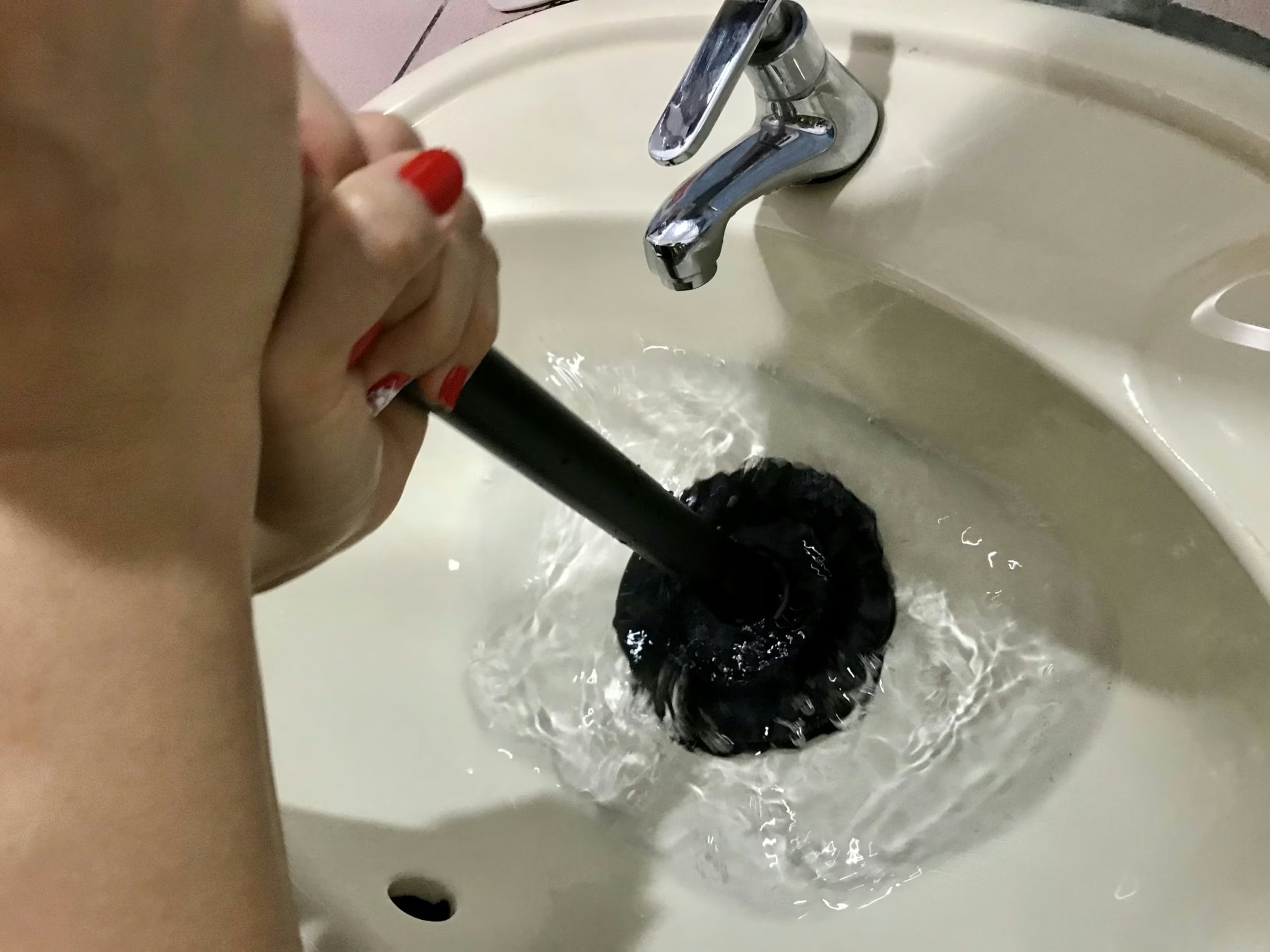
A plunger is the best first move for a sink, tub or toilet. Use a cup plunger for flat surfaces such as sinks and tubs, and a flange plunger for toilets.
- Block the overflow opening with a wet rag, and the second sink basin if there is one.
- Add enough water to cover the plunger cup.
- Seat the plunger flat over the drain, then pump firmly 10 to 15 times without breaking the seal.
- Pull the plunger off and see whether the water drains.
Repeat a few times before moving on. If you used chemicals recently, do not plunge, because of the splash risk. Call a plumber.
2. Clean the P-Trap
Under a sink, the curved P-trap catches hair, soap scum and debris. Put a bucket underneath, loosen the slip nuts by hand or with pliers, and remove the trap. Empty it, rinse it, check the washers and reassemble it snugly. Run water and check for leaks. This is a safe DIY job on most kitchen and bathroom sinks.
3. Use a Hand Drain Snake
A small hand-crank drain snake reaches past the trap and pulls out hair or breaks up a clog. Feed it into the drain until you feel resistance, turn the handle to engage the clog, then pull it back slowly. Wear gloves and expect a mess. For tub drains, a plastic drain-cleaning strip with barbs is a cheap alternative that removes hair. Go gently, since a forced snake can scratch fixtures or push a clog deeper.
4. Try Hot Water and Dish Soap for Grease
For a kitchen sink that is slow from a light grease buildup, pour a squirt of dish soap down the drain followed by a kettle of hot, not boiling, water. Boiling water can damage PVC and cracks porcelain, so avoid it. This will not clear a hard clog, but it can help a light grease film. Do not rely on it for a full blockage. Our drain cleaning page explains what professional equipment does better.
A Note on Baking Soda and Vinegar
This popular mix fizzes, but it is gentle and has little power against a real clog. It is a reasonable maintenance flush for a slow drain and it is far safer than caustic cleaners. Do not expect it to clear a solid blockage, and do not use it right after a chemical cleaner.
Signs the Clog Is Not a DIY Job
- More than one fixture is slow or backing up, especially the lowest drains in the house.
- Water gurgles in a toilet or tub when you run the sink or washing machine.
- Sewage odors are coming from drains or the yard.
- The same drain clogs again within days or weeks.
- A plunger and snake do nothing.
These point to a blockage in the main sewer line, and the SFPUC advises that if sewage backs up inside your property, you should have a licensed plumber inspect the lateral because it may only need debris cleared. A plumber can use a camera to see inside the line and a hydro jetter to clear grease and roots from the pipe wall. Read more about camera inspection and hydro jetting.
How to Keep Drains Clear
- Use a hair catcher in every shower and tub drain.
- Keep cooking grease out of the sink. Let it cool, then put it in the trash.
- Use a sink strainer in the kitchen.
- Flush only toilet paper and human waste, as the SFPUC advises.
- Run hot water for a minute after washing dishes.
What About Enzyme and Bacterial Cleaners?
Enzyme-based drain products are gentler than caustic cleaners and are sold for routine maintenance. They work slowly and are meant to keep a clear drain clear. They are not designed to open a standing clog, so treat them as a maintenance product, not a rescue. If water is already standing in the sink, use a plunger or trap cleaning first.
Frequently Asked Questions
Is Drano safe for pipes?
Not for repeated use, especially in older homes. Caustic cleaners generate heat and strong chemicals that are hard on aging pipes and fittings. Mechanical methods are safer.
What if I already poured Drano and the drain is still clogged?
Do not plunge, and do not add another product. Stand back from the standing water, keep children and pets away, and call a plumber. Tell them what you used.
Why does a drain keep clogging after I clear it?
Repeated clogs usually mean buildup deeper in the line that a plunger or cleaner does not reach, or damage such as roots or a sagging pipe. A camera inspection shows the cause.
Get Help from Works Plumbing
If a drain will not clear, or you have already used a chemical cleaner, Works Plumbing and Rooter, Inc. can help. We are a family-owned company, California contractor license CSLB #982663, serving the Peninsula since 2009. We are open 24/7 with same-day service. See our clogged drain repair page, then call 650-899-3542 or contact us online.


 Licensed & Insured · CA LIC #982663
 Open 24/7 · Mon-Sun
 Pacifica, San Francisco, Burlingame, CA · Serving the Bay






 TAP TO CALL • 24/7