No hot water, rusty hot water, a puddle under the tank, or a unit that ran out halfway through the second shower. We repair and replace tank water heaters across Pacifica, San Francisco, and Burlingame, size them to the house rather than to the old unit, and haul the old one away.
Get a Free Estimate
Upfront pricing. Same-day service. No obligation.
"*" indicates required fields
We’ll call you back fast.
THIS MONTH’S BEST DEAL
$75
OFF
$75 OFF Any Plumbing Repair Over $500
One-time use. Combine with our 24/7 emergency service and pay only when the job is done. Mention this offer when you book.
Water Heater Installation and Repair in Pacifica, San Francisco and Burlingame
Whether a water heater is worth repairing comes down to what failed and how old it is. Thermocouples, gas control valves, heating elements, and thermostats are all repairs, and on a unit under about eight years old they are usually the right call. Anode rods are maintenance. What is not repairable is a leaking tank, because that means the glass lining has failed and the steel is corroding through, and no fitting will fix a shell.
When it is replacement, sizing matters more than brand. The old unit is not automatically the right size, because households change: a 40 gallon tank that suited a couple does not suit four people with two bathrooms. We look at fixture count, simultaneous demand, and recovery rate rather than reading the label on what is already there.
Installation also has to satisfy current code, which is where a lot of older setups fall short: seismic strapping, expansion tank, drain pan and discharge, correct venting, and combustion air. We bring the install up to code rather than replicating what was there. Book a free estimate any time, no obligation.
Repair or Replace Your Water Heater
Most water heater decisions start with a breakdown, which is the worst time to make one. Here is how we help Peninsula homeowners decide when a new unit makes sense, which type fits the house, and what actually moves the price.
Signs Replacement Makes Sense
Repairs are stacking up. If you have paid for more than one repair in the last couple of years, the money is usually better spent on a new unit.
Rumbling or popping from the tank. Hardened sediment on the bottom of a gas tank makes the burner work harder and wears on the steel.
Rust or moisture at the base or fittings. Corrosion where the tank meets the floor, or around the inlet and outlet, often comes before a leak.
The household has outgrown it. A new bathroom, more people at home, or a large soaking tub can leave a working heater unable to keep up.
You are remodeling or planning ahead. If the garage or utility area is being rebuilt, or you are moving away from gas, replacing on your schedule beats replacing in an emergency.
Tank, Tankless, or Heat Pump
Works Plumbing installs all three, and the right one depends on the house as much as the budget.
Tank water heaters store heated water and are the simplest swap when the existing gas line, venting, and space already suit them. They usually cost the least to install and are familiar to service.
Tankless water heaters heat water only when a tap opens, so you do not run out during back-to-back showers, and they mount on a wall to free up floor space. Gas models often need a larger gas line and new venting, which is where much of the install cost sits.
Heat pump water heaters are electric units that move heat from the surrounding air into the water. They need open space around the unit, a suitable electrical circuit, and a condensate drain, and they suit homeowners who want to move off gas.
What Drives the Cost
Size and capacity of the tank, or the flow rate of a tankless unit.
Fuel type, and whether you are staying with gas or switching to electric.
Venting, including whether the old flue can be reused or new venting is required.
Gas line capacity, since tankless units often need a larger line than the old tank used.
Location, such as a tight closet, an attic, or a crawlspace compared with an open garage.
Code upgrades that older installations are missing, such as an expansion tank, drain pan, or proper strapping.
We price each of these upfront, in writing, before any work starts.
California Water Heater Strapping Law
California Health and Safety Code Section 19211 requires new, replacement, and existing residential water heaters to be braced, anchored, or strapped so they resist falling or shifting in an earthquake. The same section requires a home seller to certify to the buyer that the water heater meets this requirement. A tank that tips in a quake can break its gas connection and its water lines at the same moment, so every water heater we install is strapped to code.
We diagnose what failed, check the age and the condition of the tank, and tell you plainly whether this is a repair or a replacement before quoting.
You approve the price, and our licensed tech does the work from a fully stocked truck, so most jobs finish in a single visit without a parts run.
We install to current code including strapping and expansion tank, test recovery and temperature, walk you through the controls, and take the old unit away.
Thank you again for another job well done, and thank you for responding right away. I will continue to recommend Works Plumbing because they respond right away and get the job done efficiently.
Deomen L., San Mateo, Google review
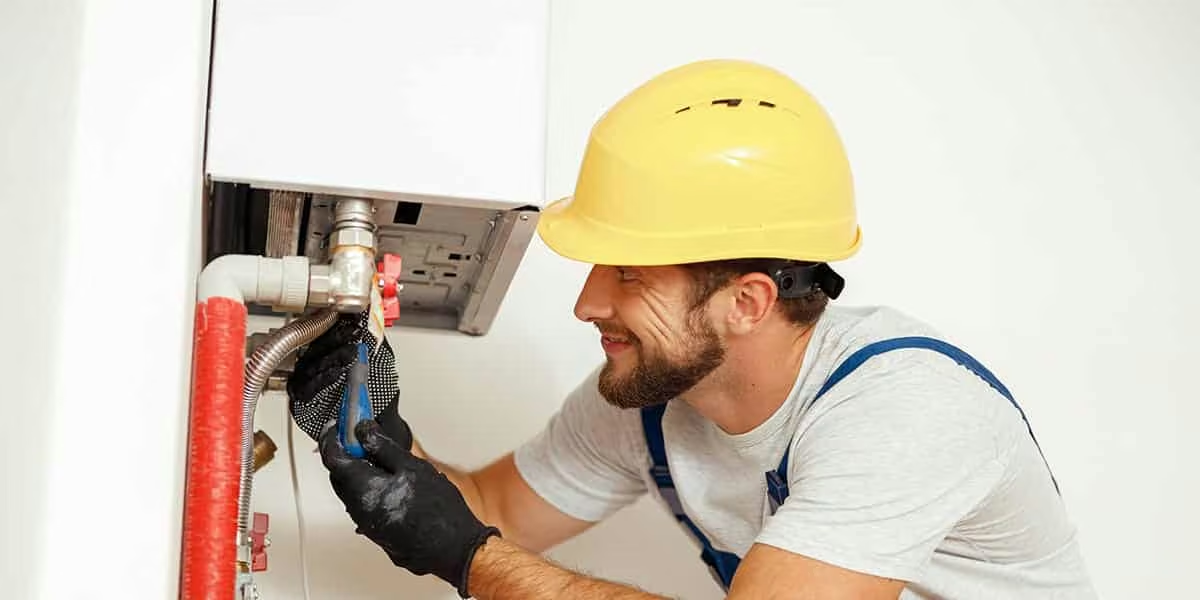
A replacement 50 gallon heater installed with seismic strapping and a new expansion tank in Burlingame.
Why homeowners choose Works
Every water heater job comes with upfront pricing, licensed and background-checked technicians, and a 100% satisfaction guarantee. Works Plumbing holds California contractor license #982663, carries full bonding and insurance, and holds an A+ rating with the Better Business Bureau.
We are a plumbing-only shop, which means the tech at your door has spent years on this exact work rather than splitting time across three trades. Our crews are drug tested as well as background checked, and dispatch is staffed by real people around the clock. No surprises, no commission-driven upsells, no pressure, ever.
Pro tip
Drain a couple of gallons off the tank valve once a year and look at what comes out. Sediment settles on the bottom of the tank, insulates the burner from the water, and quietly costs you both efficiency and tank life. If the water runs clear, you are fine. If it runs rusty or full of grit, the tank has been neglected and is closer to the end of its life than its age suggests.
See how we handle it:
Prefer to listen? Catch this topic on our homeowner podcast:
The Works Plumbing Podcast · Homeowner Tips
Ready to get it fixed?
Upfront pricing, licensed techs, and a real human on the phone 24/7 across the Peninsula.
Age is the deciding factor. Under about eight years, most failures are a thermocouple, gas valve, element, or thermostat, and repair is the sensible spend. Over about twelve, a repair is money into a unit that will fail again soon. In between it depends on what broke and what the tank looks like inside. If the tank itself is leaking, replacement is the only option at any age, because the lining has gone.
What size water heater do I need?
It depends on simultaneous demand rather than house size. As a rough guide, 40 gallons suits one to three people, 50 suits three to four, and larger households or homes with two bathrooms in regular concurrent use want 65 or more, or a tankless system. Recovery rate matters as much as capacity. We size it on your fixtures and habits, not on what happens to be in the garage now.
How long does a water heater last?
Eight to twelve years for a tank unit is typical, and maintenance moves that meaningfully. An anode rod replaced on schedule and an annual sediment flush can add years, while a tank never drained in a decade will be at the short end. Tankless units run fifteen to twenty years, which is part of the argument for the higher up-front cost if you plan to stay in the house.
Why is my hot water rusty?
Usually because the anode rod has been consumed and the tank lining is now corroding. The rod is a sacrificial component, it corrodes so the steel does not, and once it is gone the tank starts going instead. If only the hot side runs rusty, the heater is the source. If both hot and cold run rusty, the problem is your supply piping, which points at galvanised pipe rather than the heater.
Are you licensed and insured?
Yes. Works Plumbing holds California contractor license #982663, carries full bonding and liability insurance, and is accredited with an A+ rating from the Better Business Bureau. Every technician who comes to your door is background checked and drug tested, and arrives in a marked Works van in uniform. If you want to verify the license before booking, you can look it up on the California Contractors State License Board website.
Do you offer financing?
Yes. Plumbing problems do not wait for payday, so you can spread the cost over 12, 24, or 60 months through our financing partners. Approval takes about 60 seconds, runs on a soft credit check that does not affect your score, and there is no prepayment penalty if you clear it early. Qualifying plans include 0% APR for the first 12 months.
Where We Work
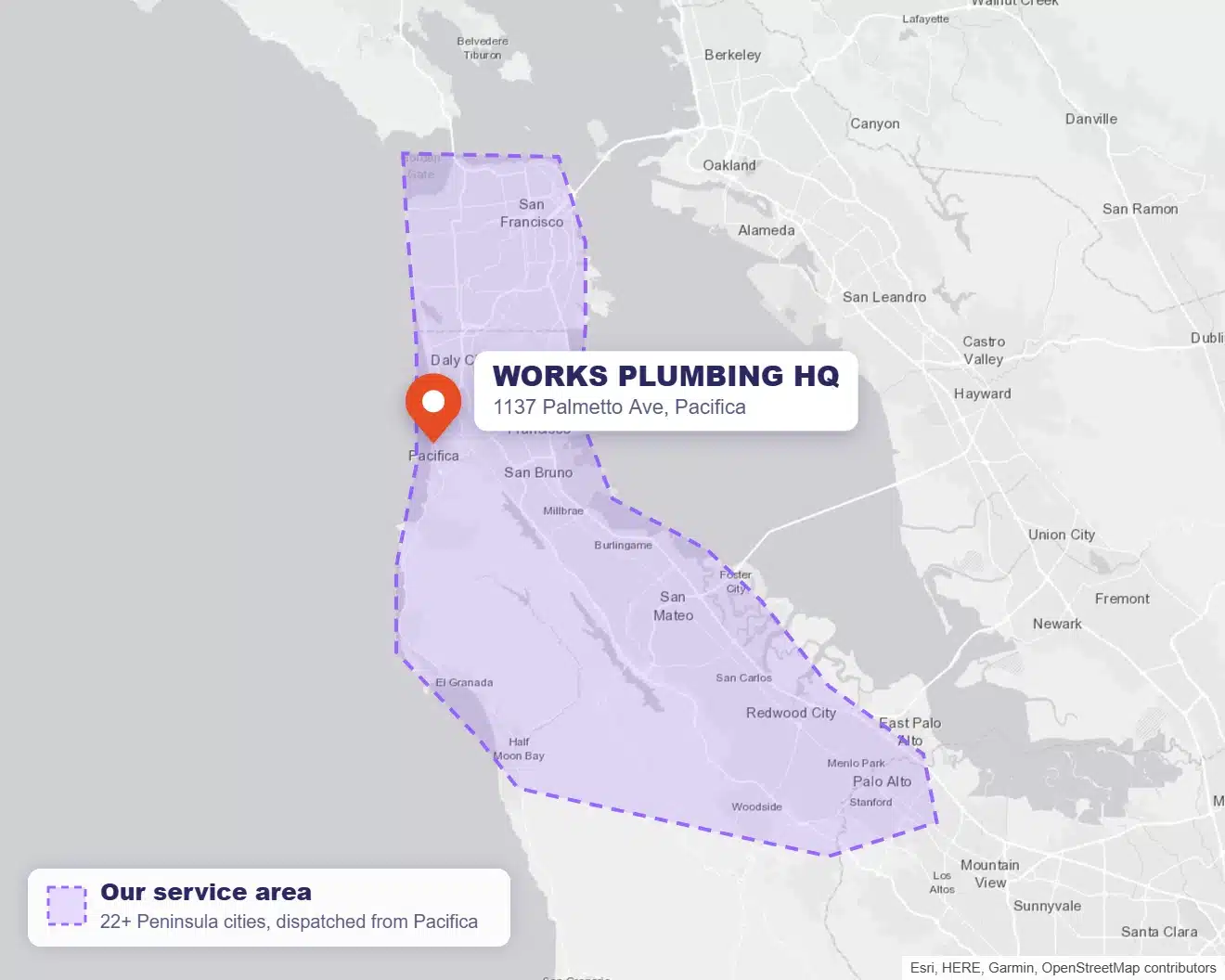
Serving Pacifica, San Francisco and Burlingame.
Three Peninsula locations put a stocked truck near you, from San Francisco down to Atherton, covering 22+ cities every day.
Combined across our Pacifica, San Francisco, and Burlingame locations.
“I had a backed up kitchen drain and David from Works Plumbing came out and cleared the line in a matter of minutes. Very professional and very knowledgeable. Definitely recommend!”
ER
Emmanuel R.
Pacifica, Google Review
“Great professional and quick service! Shamir was friendly, efficient, and professional. He fixed the leaking problem in my sink and garbage disposal in under an hour. Highly recommend!”
GG
George G.
Daly City, Yelp Review
“Thank you again for another job well done, and thank you for responding right away. I will continue to recommend Works Plumbing because they respond right away and get the job done efficiently.”
DL
Deomen L.
San Mateo, Google Review
Google reviews
Yelp reviews
A+
BBB Accredited
Pay Your Way
BIG REPAIR? SMALL PAYMENTS.
Plumbing emergencies don’t wait for payday. Spread your cost over 12, 24, or 60 months with affordable financing options through trusted partners.
A real human will answer, dispatch a stocked Works van, and get someone at your door the same day. No phone trees. No robots. No “we’ll get back to you Monday.”





 Google rated. BBB A+ accredited.









 TAP TO CALL • 24/7