Most people in Burlingame, CA, assume that because their water comes from a municipal supply, it’s clean enough not to worry about. And to be fair, municipal water does go through treatment before it reaches your home. But treatment at the source and quality at the tap are two different things. By the time water travels through miles of aging infrastructure and into your home’s own plumbing system, it can pick up contaminants that weren’t present when it left the treatment plant. Understanding what water purification systems actually do and what they protect against gives you a clearer picture of whether one makes sense for your household.
What’s Actually in Your Tap Water
Burlingame’s water supply comes from regional sources managed by the San Francisco Public Utilities Commission, which treats water to meet federal and state standards. Meeting those standards means the water is considered safe under regulatory definitions, but “safe” and “pure” aren’t the same thing. Treated municipal water can still contain detectable levels of chlorine and chloramine used in the treatment process, trace amounts of heavy metals like lead that can leach from older pipes and fixtures, disinfection byproducts, agricultural runoff compounds in some supply blends, and sediment or particulates introduced after treatment.
None of these are necessarily present at levels that pose an immediate health risk under current standards. But standards reflect what’s considered acceptable at the population level, not what’s optimal for your specific household, and they don’t account for the condition of the plumbing inside your home.
How Purification Differs from Basic Filtration
There’s a meaningful difference between a basic water filter and a true water purification system. A standard pitcher filter or a simple faucet attachment can reduce chlorine taste and odor and capture some sediment. That’s useful, but it’s a limited level of treatment.
A water purification system goes further. Depending on the type and configuration, it can remove a much broader range of contaminants, including chlorine, chloramine, heavy metals, volatile organic compounds, bacteria, viruses, cysts, nitrates, and pharmaceuticals. The right system for your home depends on what’s actually in your water, which is why starting with a water quality analysis is a practical first step before investing in any purification solution.
The Main Types of Water Purification Systems
There are several purification technologies available for residential use, and they work in different ways to address different contaminants.
Reverse Osmosis Systems
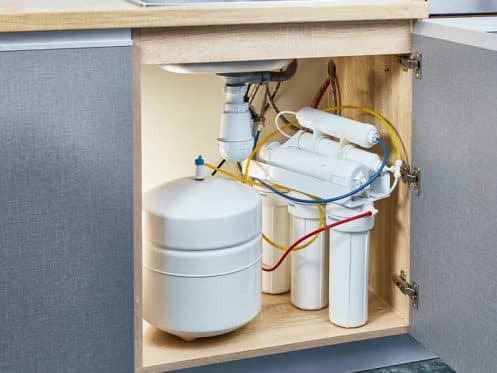
Reverse osmosis is one of the most effective purification methods available for residential use. Water is pushed through a semi-permeable membrane that blocks contaminants at a molecular level. A quality reverse osmosis system can remove up to 99 percent of dissolved solids, heavy metals, chlorine, fluoride, nitrates, and many other compounds. Most reverse osmosis systems are installed under the kitchen sink and provide purified water at a dedicated tap, though whole-house reverse osmosis systems are also available for more comprehensive treatment.
The tradeoff with reverse osmosis is that it produces a relatively small volume of purified water compared to the water it processes, and it removes beneficial minerals along with harmful ones. Some systems include a remineralization stage that adds back a balanced mineral content after filtration.
Whole House Water Filtration
A whole-house water filtration system is installed at the point where the main water line enters the home, treating every drop of water that comes out of every tap and fixture. This approach protects not just the water you drink but also the water you bathe in, cook with, and use for laundry. It also protects your plumbing fixtures and appliances from sediment and chemical buildup.
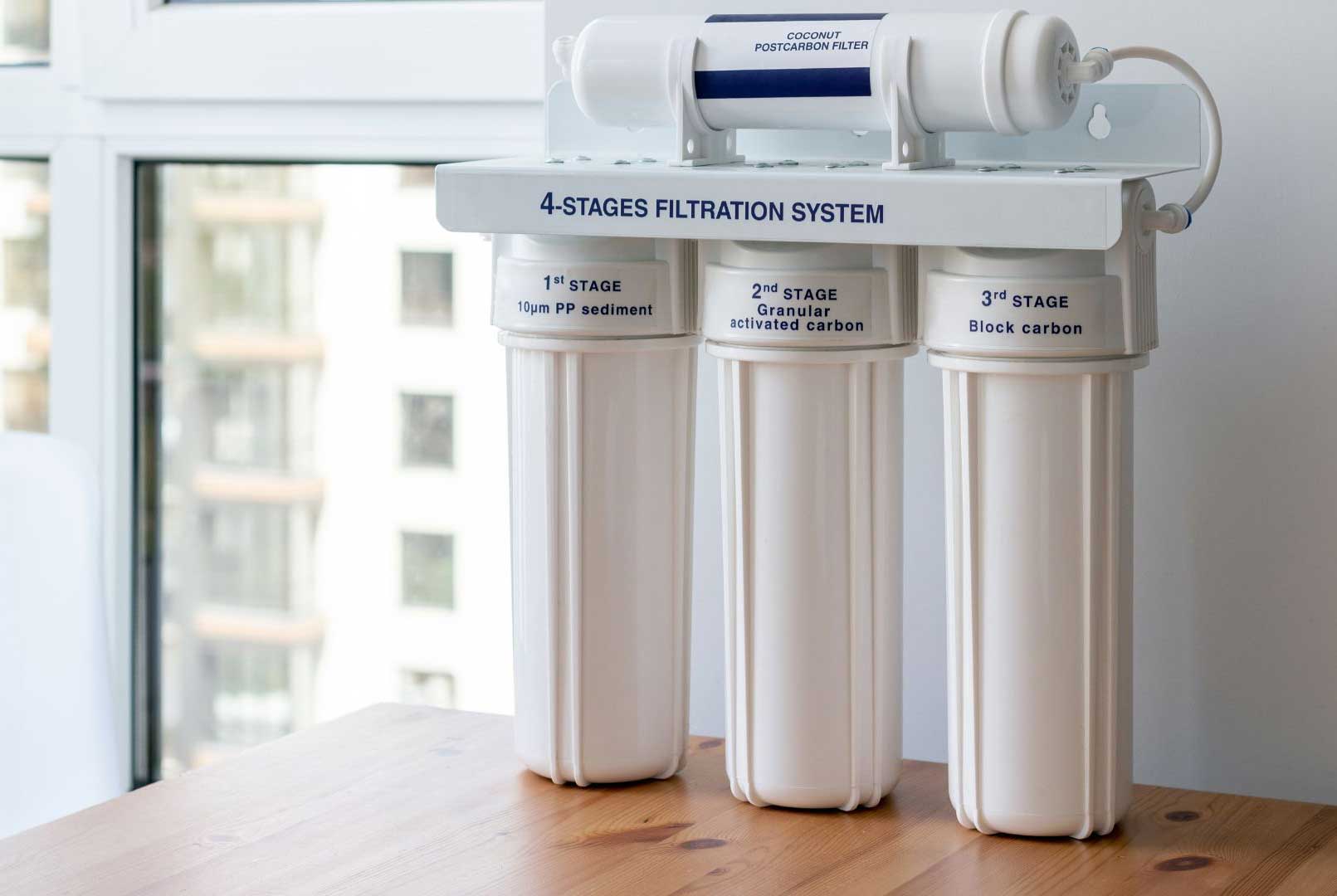
Whole house systems typically use a combination of filtration stages, including sediment pre-filters, activated carbon filters, and sometimes additional media specific to the contaminants present in your water supply. They’re a comprehensive solution for households that want consistent water quality throughout the home rather than just at one point of use.
Under Sink Water Filters
For homeowners who want improved water quality at the kitchen sink without the scope of a whole-house system, under-sink water filters offer a practical middle ground. These systems are installed beneath the sink and connected to a dedicated faucet, providing filtered water specifically for drinking and cooking. They’re more effective than countertop filters and less invasive than whole-house systems, making them a reasonable entry point for households new to water purification.
UV Purification Systems
Ultraviolet purification uses UV light to neutralize bacteria, viruses, and other biological contaminants without adding chemicals to the water. UV systems are often used in combination with other filtration methods rather than as a standalone solution, particularly in situations where biological contamination is a concern. They don’t remove chemical contaminants or dissolved solids, but they’re highly effective at what they’re designed to do.
What Purification Means for Household Health
The health implications of improved water quality aren’t always dramatic and immediate. In most cases, the benefits accumulate over time in ways that are real but not always easy to attribute directly to the water.
Reducing chlorine and chloramine exposure matters for households where members have sensitive skin, respiratory sensitivities, or allergies. These compounds are necessary for treating water at the municipal level, but they aren’t something you necessarily want to continue consuming or absorbing through the skin once the water reaches your home.
Removing lead is particularly important in older homes. Lead can leach from older pipes, solder, and fixtures, and there is no established safe level of lead exposure for children. If your Burlingame home was built before 1986, lead in the plumbing is a legitimate concern worth testing for and addressing.
Reducing disinfection byproducts, compounds formed when chlorine reacts with organic matter in the water, is another meaningful benefit. Some of these byproducts have been associated with health concerns at higher exposure levels over time.
For households with infants, elderly members, or people with compromised immune systems, the case for purification is stronger. These groups are more vulnerable to contaminants that a healthy adult might handle without noticeable effect.
What Purification Does for Your Plumbing and Appliances
The benefits of water purification aren’t limited to what you drink. Cleaner water is also easier on your plumbing system and the appliances connected to it. Sediment and mineral content that’s reduced before it enters your pipes means less buildup inside the lines, less stress on fixture components, and longer-lasting appliances like dishwashers, washing machines, and water heaters.
If your home is dealing with hard water alongside other water quality concerns, a purification system can be paired with a water softener for comprehensive treatment. The softener handles mineral hardness, and the purification system addresses chemical and biological contaminants. Together, they cover most of what affects both water quality and plumbing health.
Homes that invest in water treatment often find that plumbing repair needs decrease over time as scale buildup, sediment damage, and chemical corrosion are reduced throughout the system.
How to Know Which System Is Right for Your Home
The honest answer is that the right system depends on what’s actually in your water. Without testing, you’re making a decision based on assumptions rather than information. A water quality analysis identifies the specific contaminants present in your water supply and at what concentrations, which allows a plumber or water treatment specialist to recommend a system that actually addresses your specific situation rather than a generic one-size-fits-all solution.
Factors like household size, how the water will primarily be used, your budget, and whether you want point-of-use or whole-house treatment all factor into the decision as well. A conversation with a licensed plumber who understands water treatment can help you sort through the options without feeling like you’re being steered toward something unnecessary.
Start with the Right Information
If you’ve never had your water tested and you’re curious about what’s actually coming out of your taps, that’s the logical starting point. From there, the path to cleaner, healthier water in your Burlingame home becomes a lot clearer.
Improve Your Water Quality with Works Plumbing
Works Plumbing helps Burlingame homeowners understand their water quality and find purification solutions that genuinely fit their needs. Whether you’re starting with a water test or ready to discuss installation options, our team is here to give you straight answers and practical guidance. Call us today or book online to get started.