Professional drain pipe cleaning uses a short list of tools: plungers, hand augers (drain snakes), motorized drum machines, hydro jetters and inspection cameras. Which one is right depends on where the clog is and what it is made of. You can handle a simple sink or tub clog with a plunger or hand snake. Repeat clogs, slow drains in more than one fixture, and anything in the main sewer line call for a licensed plumber and professional equipment.
Start by Locating the Clog
The location tells you what tool you need and whether the job is DIY.
- One fixture is slow or blocked: the clog is in that fixture’s trap or branch line. This is usually a DIY job.
- Several fixtures on one floor back up together: the clog is further down, in a branch or the main drain.
- The lowest drain in the house gurgles or backs up, or a toilet bubbles when you run a sink: suspect the main sewer line. Stop using water and call a plumber.
The Seven Tools, From Simple to Professional
1. Plunger
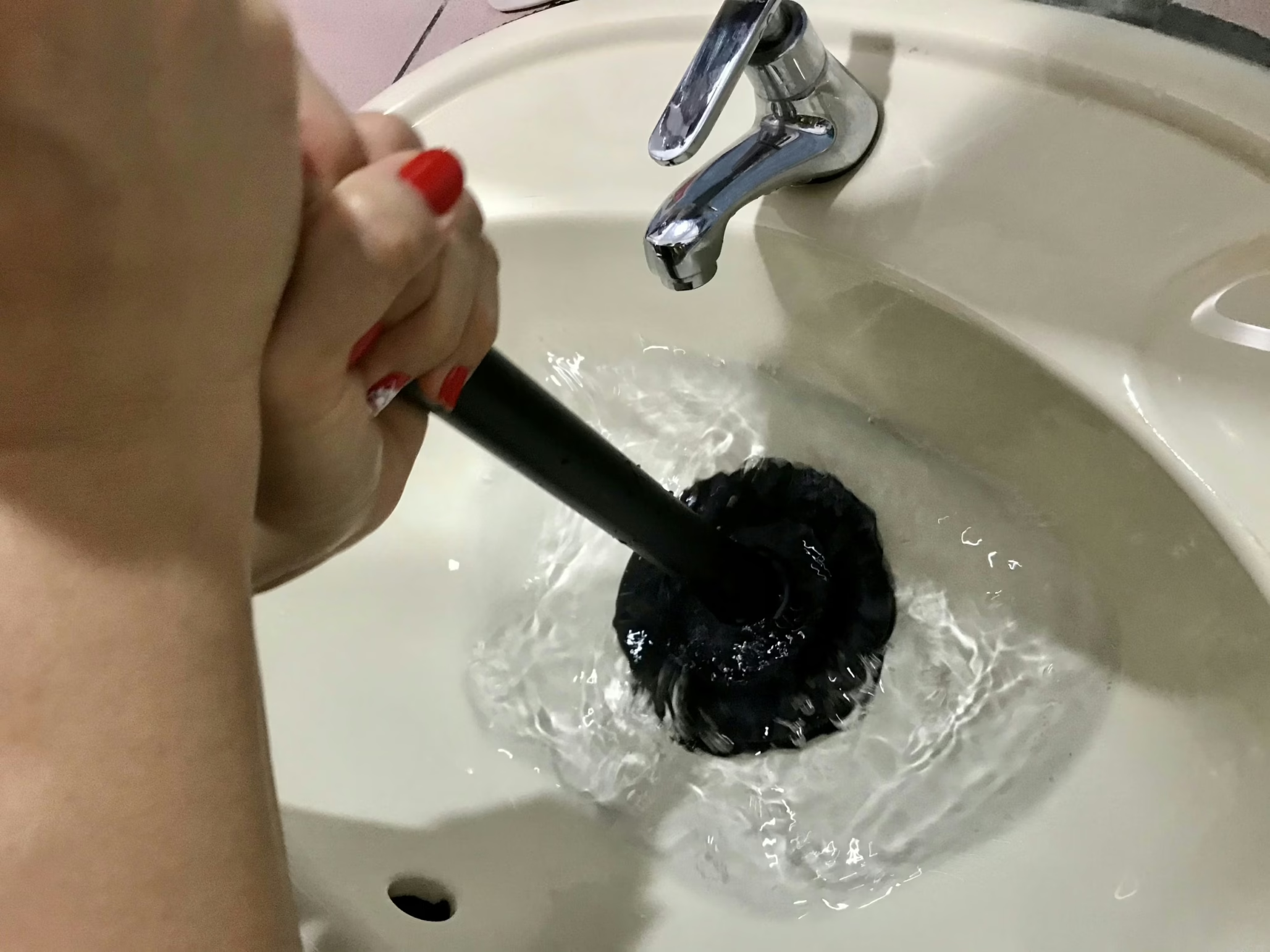
A cup plunger works on sinks, tubs and showers. A flange plunger, with the extra rubber lip, is made for toilets. Seal the overflow opening with a wet rag so pressure goes down the drain, then work the plunger with firm strokes. It clears soft clogs close to the fixture, such as soap, hair and food buildup. It does not reach deep clogs.
2. Drain Strip or Hair Tool
A thin plastic strip with barbs pulls hair out of tub and bathroom sink drains. It is cheap and safe, and it is often all a slow bathroom drain needs. Do not force it if it meets hard resistance.
3. Hand Auger (Drain Snake)
This is a coiled steel cable with a crank handle. You feed the cable into the drain until you feel the clog, then turn the handle so the tip breaks it up or hooks it. Homeowners use hand augers on kitchen sinks, tubs and bathroom sinks. Wear gloves and eye protection. Go slowly, because pushing hard can scratch fixtures or damage older, thin-walled pipe.
4. Closet Auger
A closet auger is a short, stiff auger with a protective sleeve, designed to pass through a toilet bowl without scratching the porcelain. It reaches clogs in the toilet’s built-in trap.
5. Drum Machine (Motorized Drain Cleaner)
A drum machine stores a longer cable and spins it with a motor. Plumbers use this for kitchen lines, bathroom branch lines and main drains where hand tools do not have the reach or power. Cable sizes are matched to the pipe. The wrong size or technique can damage a pipe, which is one reason this is not a job for a first-time user. Our drain cleaning service uses professional equipment sized for each pipe.
6. Hydro Jetter
A hydro jetter sends high-pressure water through a hose and nozzle. It scours grease, scale, sludge and soap film off the walls of the pipe rather than just poking a hole through the clog. It is the best tool when a drain keeps clogging, when buildup lines the pipe, or when roots are in a sewer line. Jetting needs the right nozzle, pressure and a plumber who knows the condition of the pipe first, since weak or damaged pipe can be harmed. Read more about hydro jetting.
7. Sewer Inspection Camera
A camera on a flexible cable lets a plumber see inside the pipe. It shows whether the problem is grease, roots, a collapsed section, a bellied line or a foreign object, and it records the location. Plumbers use it before and after cleaning to confirm the line is clear and to decide whether the pipe needs repair rather than another cleaning. See our camera inspection page.
What About Chemical Drain Cleaners?
Store-bought liquid drain openers are tempting, but they come with problems. They are corrosive and can irritate or burn skin and eyes. Oregon Metro, a regional government agency, lists drain cleaners and bleach among household hazards that can contain corrosive, flammable or toxic ingredients, and says unused products should go to a hazardous waste facility or collection event. Other practical concerns:
- Never mix different cleaners in a drain. Some combinations release toxic gas.
- If a chemical cleaner fails, the standing liquid is still in the pipe. A plumber then has to work around it, so tell your plumber what you used.
- Do not use a snake or plunger right after pouring a chemical in, because splashing is a real risk.
- Chemicals can do little to clear a clog caused by roots, a collapsed pipe or a foreign object.
If a clog does not clear with a plunger or snake, skip the chemicals and call a plumber.
Which Tool for Which Job
- Slow bathroom sink or tub: drain strip, then a hand auger.
- Kitchen sink with grease buildup: hand auger for a single clog, hydro jetting for repeat clogs.
- Toilet: flange plunger, then a closet auger.
- Several drains slow, or a main line backup: drum machine or hydro jetter, with a camera to confirm the cause.
- Clog that returns after cleaning: camera inspection to find out why.
What Causes Drain Clogs Here
Most clogs come from what goes down the drain: grease and food scraps in the kitchen, hair and soap in the bathroom, and wipes or paper products in the toilet. Grease cools and hardens inside the pipe, narrowing it over time. Wipes labeled flushable should still go in the trash.
Older Peninsula homes add to the problem. Pipes installed decades ago can be rough on the inside, corroded, or shifted by settling, and tree roots find their way into old clay or cast iron sewer lines. If your home has older drain lines and you see slow drains in several fixtures, a cleaning will help only until the underlying condition is dealt with. A camera inspection tells you which it is.
How to Keep Drains Clear
- Scrape plates into the trash or compost, not the sink. Pour cooled grease into a container and throw it away.
- Use drain screens in showers, tubs and kitchen sinks.
- Run hot water for a short while after washing dishes.
- Flush only toilet paper and human waste.
- Do not run the garbage disposal on fibrous or starchy foods.
- Pay attention to the first sign: a slow drain is easier to clear than a full blockage.
When to Call a Plumber
Call a licensed plumber if:
- A plunger and hand snake do not clear the clog.
- The same drain clogs more than once.
- More than one fixture is slow or backing up.
- You smell sewage or see water coming up in a floor drain, shower or tub.
- You think the clog is in the main sewer line.
A plumber can match the tool to the problem and use a camera to confirm the line is clear afterward, so you are not guessing.
Professional Drain Cleaning on the Peninsula
Works Plumbing handles drain pipe cleaning with the right equipment for the job. Call 650-899-3542 any time. We are a family owned, licensed plumbing contractor (CSLB #982663), open 24/7 and serving the Peninsula since 2009. Learn about our drain cleaning service, or contact us to schedule a visit.


 Licensed & Insured · CA LIC #982663
 Open 24/7 · Mon-Sun
 Pacifica, San Francisco, Burlingame, CA · Serving the Bay




 TAP TO CALL • 24/7