Works Plumbing offers hydro jetting in San Bruno, CA for sewer laterals and main drains that keep clogging. High-pressure water scours roots, grease, and scale off the pipe wall instead of punching a small hole through the blockage.
Get a Free Estimate
Upfront pricing. Same-day service. No obligation.
"*" indicates required fields
We’ll call you back fast.
THIS MONTH’S BEST DEAL
$75
OFF
$75 OFF Any Plumbing Repair Over $500
One-time use. Combine with our 24/7 emergency service and pay only when the job is done. Mention this offer when you book.
If your line has been cabled before and backed up again, jetting may be the better tool. Ask Works Plumbing about hydro jetting and we will check the line first.
What Hydro Jetting Does
A drain cable is a spinning blade. It opens a path through a clog, which restores flow, but it leaves much of the buildup on the pipe walls.
A jetter sends water through a specialized nozzle at high pressure. Rear-facing jets pull the hose forward while scrubbing the full circumference of the pipe. The loosened material flushes downstream.
The difference shows up over time:
Cabling is fast and often enough for a simple clog.
Jetting removes the coating that causes the next clog.
Signs Your Line Needs Jetting
A main line that backs up again within months of being cleared
Slow drains throughout the house, not just one fixture
Gurgling toilets when the washer or dishwasher drains
A camera inspection showing roots, grease, or scale on the walls
Kitchen lines packed with grease from years of use
Our Hydro Jetting Process
Camera first. We inspect the line to see what is inside and whether the pipe is sound enough for jetting.
Choose the nozzle and pressure. Roots, grease, and scale each call for a different setup.
Jet from the cleanout. We work through the line toward the public sewer.
Flush and verify. We run water to confirm full flow.
Camera after. A second look shows the cleaned pipe and any joints or defects that need attention.
You get an upfront price before we start, and we show you the before and after footage.
When Jetting Is Not the Right Call
Jetting is powerful, so we do not use it on every line. We hold off when the camera shows:
The tree feeding roots into your line may be protected under city rules.
The city’s heritage tree rules require a permit to prune or remove a protected tree. A permit can allow pruning of “up to one-quarter of the root system.” Street trees are covered too: owners need a permit to trim or remove a street tree, and to trim a private tree whose roots encroach onto the street.
So digging out a root system is not a casual fix. For most homeowners, the practical answer is to clear roots inside the pipe and keep them out at the joints.
Grease and Kitchen Lines
Roots are only part of the story. Grease poured down a kitchen sink cools and coats the pipe. Over time it hardens into a layer that traps food and soap.
A cable pushes through grease. A jetter washes it off the walls. For a kitchen line that clogs again and again, jetting followed by better habits at the sink usually lasts much longer than repeated cabling.
Jetting as Scheduled Maintenance
Some lines keep taking in roots because a tree sits close to an open joint. For those, scheduled jetting can prevent backups instead of reacting to them.
We base the interval on what the camera shows after cleaning: how much root growth, how many entry points, and how fast buildup returns. There is no standard schedule that fits every house.
Since the city’s current code puts the lateral on the owner up to and including the Y-connection at the main, a maintenance plan covers the whole length you are responsible for.
What Affects the Cost of Jetting
We quote the job before the hose goes in. The price depends on:
Line length from the cleanout to the public sewer
Access, including whether a usable outdoor cleanout exists
What is in the pipe, since a dense root mat takes longer than soft grease
Camera work before and after cleaning
Follow-up repairs, which are always quoted separately
If there is no cleanout, adding one can make this visit and every future cleaning easier. We explain that option and its price so you can decide.
Reading the After Footage
The camera pass after jetting is where you learn the most. Clean pipe walls make defects easy to see:
Root entry points at joints, which tell you where roots will return
Cracks that were hidden under buildup
Low spots where water sits after the flush
We walk through those findings with you and note which ones need a repair and which ones only need watching.
Hydro Jetting Compared With Drain Cleaning
Not every clog needs a jetter. A single slow sink or a toilet clog is usually a job for standard drain cleaning. Our drain cleaning page for San Bruno covers those everyday clogs.
Jetting is for lines with buildup on the walls: roots, grease, and scale that a cable cannot fully remove.
Why San Bruno Homeowners Pick Works Plumbing for Jetting
Works Plumbing has served the Peninsula as a family owned and operated company since 2009.
Are tree roots a common sewer problem in San Bruno?
Yes. A 2010 Regional Water Board tentative order found the city’s root-caused overflow rate at 5.1 per 100 miles in 2008 and 2009, above regional medians of 2.0 and 3.0.
Will hydro jetting damage my sewer line?
Not when the pipe is sound. That is why we inspect with a camera first. If the line is broken or badly deteriorated, we recommend repair or a gentler method.
Can I remove the tree whose roots are in my sewer line?
Possibly not without a permit. San Bruno requires permits to prune or remove heritage trees and to trim or remove street trees. Clearing roots inside the pipe avoids that.
Who pays to clear roots from the sewer lateral in San Bruno?
The owner. Under the city’s current code, the owner maintains the lateral from the building up to and including the Y-connection at the main.
How often should a root-prone line be jetted?
It depends on how fast roots return in your line. We set an interval from the camera footage after cleaning.
Do I need a permit for hydro jetting in San Bruno?
We confirm permit requirements with the city’s Building Division before any work begins, including any repair the camera shows is needed.
Hydro jetting is a plumbing service that cleans out sluggish or obstructed sewage pipes. Keeping your plumbing pipes clean and free of clogs is essential. When you start to notice that the drains and sewer lines aren’t working as well as they used to, the best thing is to call a specialist to investigate the problem and recommend solutions. They could recommend hydro jetting the plumbing line or, as mentioned earlier, recommend the most common way (and most traditional way), an old fashioned drain snaking. But instead of sticking a snake tool down the drain, hydro jetting uses a high-pressure hose with a specialized nozzle that produces enough force to clear the clogged drain. It puts more power behind the process.
What’s included
Drain cleaning & rooter service
Water heater repair & install
Leak detection
Gas line service
Emergency plumbing
Repiping & trenchless
What Does Hydrojetting Mean?
We diagnose the issue and show you a flat price upfront.
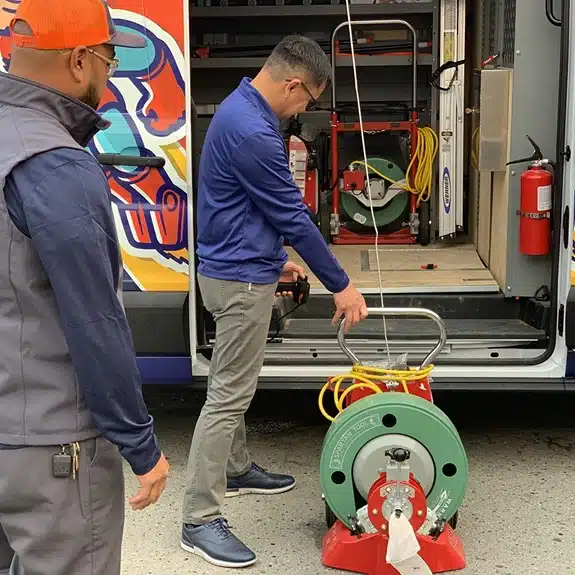
You approve it, then our tech gets to work from a fully-stocked truck.
We test the fix twice and leave your space cleaner than we found it.
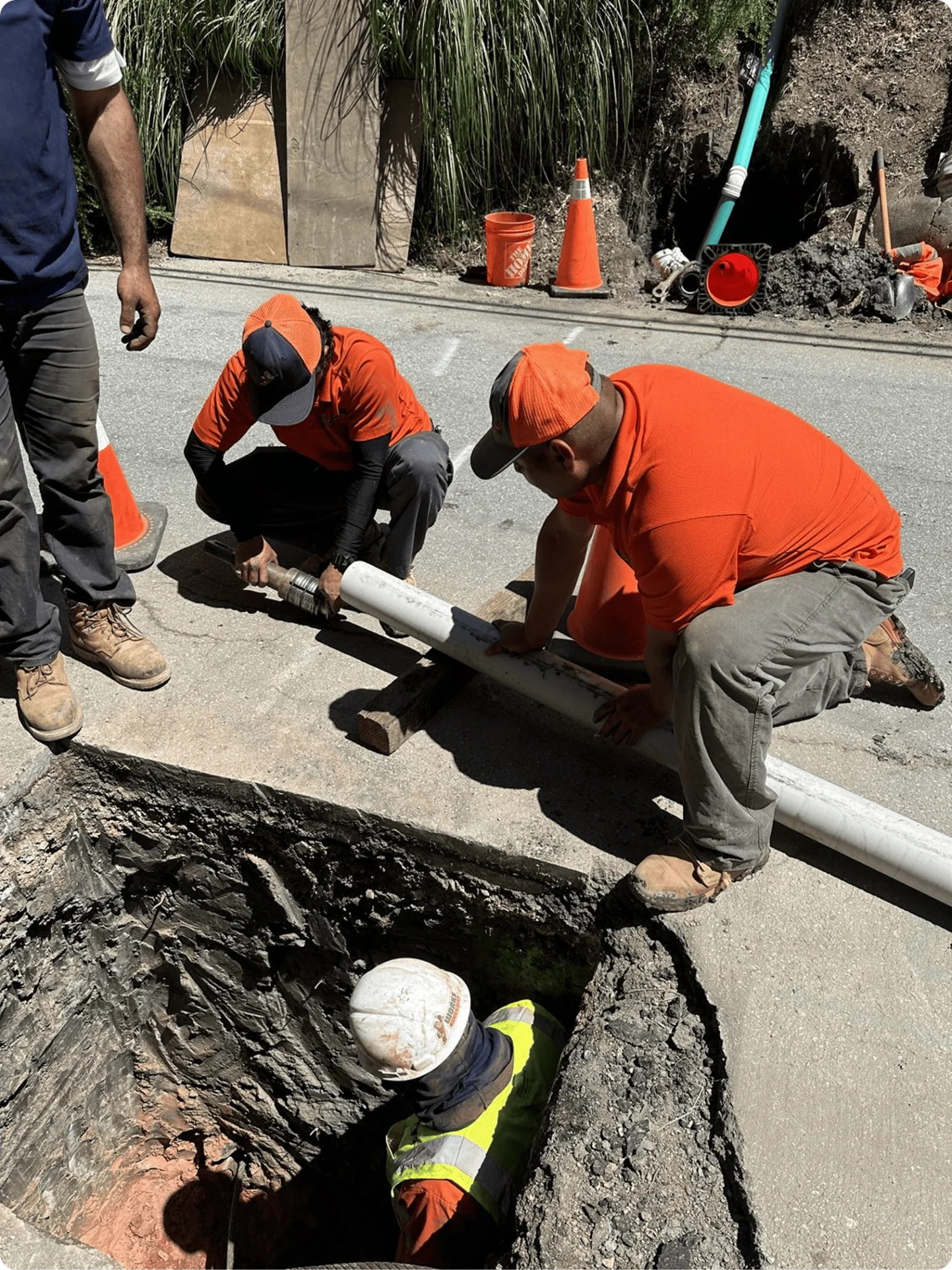
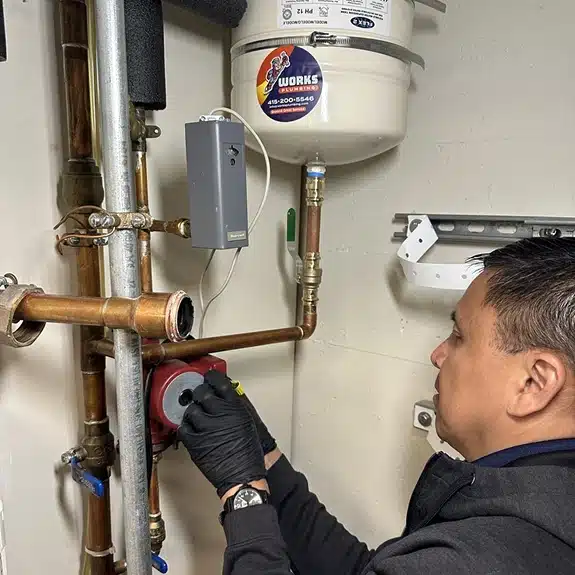
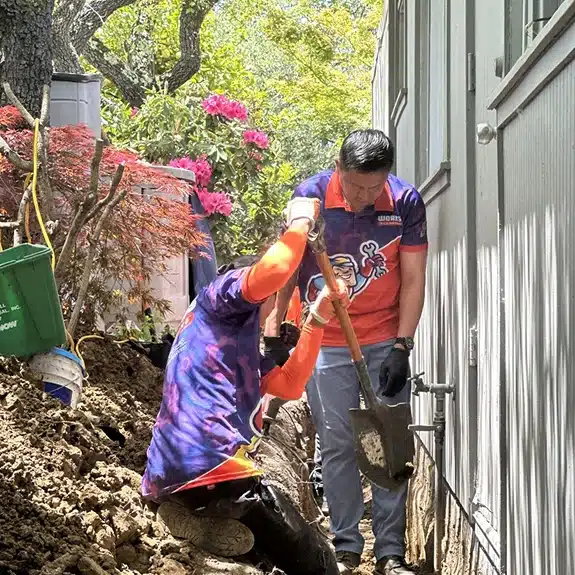
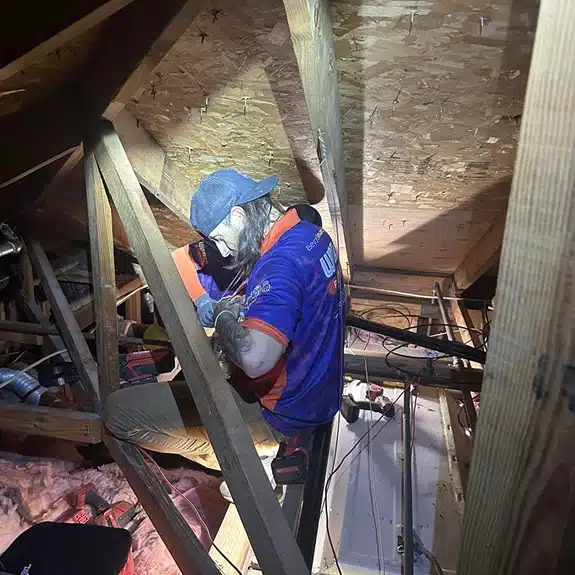
Our crew on a recent job across the Peninsula.
Why homeowners choose Works
Every job comes with upfront pricing, licensed and background-checked technicians, and a 100% satisfaction guarantee . No surprises, no pressure, ever.
Pro tip
Snap a photo of the problem before you call, it helps us bring the right parts on the first visit.
See how we handle it:
Ready to get it fixed?
Upfront pricing, licensed techs, and a real human on the phone 24/7 across the Peninsula.
Roots are not a guess in San Bruno. They are a documented sewer problem.
A 2010 Regional Water Board tentative order on the city’s sewer system found that San Bruno’s rate of sanitary sewer overflows caused by roots was 5.1 per 100 miles of sewer in 2008 and 2009. The regional medians it compared against were 2.0 and 3.0. The same document described the city’s overflows as primarily caused by blockages from roots, debris, and fats, oils, and grease. These are findings in a tentative order about the public system.
Roots get in at joints. A small gap lets moisture escape, roots follow it, and fine root hairs grow into a mat inside the pipe. Paper and grease snag on the mat, and the line narrows until it backs up.
A cable can cut a hole through that mat. The roots left on the walls grow back from what remains. A jetter’s cutting nozzles and pressure clear roots from the full pipe wall and flush the debris out of the line.
We at Works Plumbing treat a root-clogged lateral as a two-part job:
Clear it fully with jetting so the pipe is open wall to wall.
Show you the joints on camera afterward so you know where roots got in.
That second step matters. Jetting removes roots, but it does not close the gap they used. Knowing where it is lets you decide between scheduled cleaning and a repair.
We’ve earned our reputation one happy homeowner at a time.
“Thank you again for another job well done, and thank you for responding right away. I will continue to recommend Works Plumbing because they respond right away and get the job done efficiently.”
DK
David K.
San Mateo Google Review
Google reviews
Yelp reviews
Pay Your Way
BIG REPAIR? SMALL PAYMENTS.
Plumbing emergencies don’t wait for payday. Spread your cost over 12, 24, or 60 months with affordable financing options through trusted partners.
A real human will answer, dispatch a stocked Works van, and get someone at your door the same day. No phone trees. No robots. No “we’ll get back to you Monday.”





 Google rated. CSLB #982663.









 TAP TO CALL • 24/7