A hidden leak costs money every hour it runs, and guessing where it is costs more. Works Plumbing offers leak detection in Redwood City, CA that finds the source first, so any opening in a wall, floor, or yard is small and in the right place.
Get a Free Estimate
Upfront pricing. Same-day service. No obligation.
"*" indicates required fields
We’ll call you back fast.
THIS MONTH’S BEST DEAL
$75
OFF
$75 OFF Any Plumbing Repair Over $500
One-time use. Combine with our 24/7 emergency service and pay only when the job is done. Mention this offer when you book.
Most hidden leaks show up first on the water meter or the bill.
Redwood City homes get water from either the City of Redwood City or Cal Water, depending on the address.
Your supplier decides which meter we read, which bill tells the history, and who handles a leak on the street side.
We use non-invasive tools to pinpoint a leak before anything is opened.
You get a written finding and an upfront repair quote.
Signs of a Hidden Leak
Leaks rarely announce themselves. These are the most common early signs we hear about:
A water bill higher than the same period last year with no change in use
The sound of running water when every fixture is off
Warm spots on a floor, which can point to a hot water line under the slab
Stains, bubbling paint, or a musty smell on a wall or ceiling
A patch of yard that stays wet in dry weather
Water pressure that dips for no clear reason
A toilet that refills on its own between flushes
If you notice any of these, a quick meter check is the place to start.
How We Find a Leak Without Tearing Things Apart
Our approach moves from broad to narrow.
1. Meter and isolation test
With every fixture off, we watch the meter’s leak indicator. Then we close valves one zone at a time. When the meter stops, we know which part of the system is losing water.
2. Pressure testing
We pressurize isolated sections and watch for a drop. This separates a supply leak from a fixture that is quietly running.
3. Acoustic listening
Water escaping a pressurized pipe makes sound. Ground microphones and listening equipment pick it up through floors, walls, and soil, and we follow it to the loudest point.
4. Thermal imaging
For hot water lines, a thermal camera shows warm trails in floors and walls without opening anything.
5. Line tracing
On buried lines we trace the pipe route, so the excavation lines up with the leak.
At the end, we mark the location and walk you through what we found.
Where Leaks Hide in Redwood City Homes
We find leaks in the same handful of places again and again:
Under the slab. Hot water lines running through concrete in slab-on-grade homes
Inside walls. Pinholes or failed fittings behind showers, tubs, and kitchen sinks
Buried service lines. The run from the meter to the house
Toilets. A worn flapper can run quietly for weeks
Irrigation. A cracked line or a stuck valve in the yard
Water heaters. Relief valve discharge, fittings, or the tank itself
About 40 percent of Redwood City homes were built before 1960, according to Census data. Older homes often have a mix of original and replaced pipe, and leaks tend to show up where the two meet.
What a Small Leak Costs Over Time
A slow drip is easy to ignore, and that is the problem. Water that escapes into a wall cavity or under a floor does damage you cannot see:
Drywall and insulation stay wet and lose their strength
Wood framing and subfloors soften
Mold can grow in closed, damp spaces
Water from a slab leak can travel before it shows anywhere
The water itself also shows up on the bill every cycle until the leak is fixed. Finding it early keeps the repair to a pipe fitting instead of a wall, a floor, and a cabinet.
After We Find the Leak
Detection is the first half of the job. Once the location is confirmed, we quote the repair upfront. Depending on where it is:
We are family owned and operated, and we have served the Peninsula from Pacifica since 2009. When you book leak detection, you get:
Licensed and insured (CSLB #982663) technicians
Upfront pricing for detection and for repair
Non-invasive locating before any opening
Same-day service and 24/7 emergency service
Financing and coupons on qualifying repairs
We work in every part of the city, from Redwood Shores and Downtown to Roosevelt, Woodside Plaza, Friendly Acres, and the Farm Hill Road area. See all our local services on the Redwood City plumbing page, or read about our general leak detection service.
Leak Detection in Redwood City, CA: FAQs
How do I know if my Redwood City home is on City water or Cal Water?
Check your water bill. Most of Redwood City is served by the City’s own water system. Portions are served by Cal Water’s Bear Gulch District. We confirm it at the start of a visit because it decides which meter and records we use.
Who fixes a leak near the meter?
It depends on which side of the meter it is on. A leak on the street side belongs to your water supplier. A leak on the house side is a private repair. We find the exact spot and tell you which one you have.
Is Cal Water’s water different from the City’s?
Not much. In 2025, Cal Water’s Bear Gulch District bought all its water from the San Francisco Public Utilities Commission, the same regional source the City uses. Leak detection works the same way for both.
Can you find a slab leak without breaking the floor?
Yes. Pressure testing, acoustic listening, and thermal imaging narrow it to a small area. Only the repair requires an opening, and we keep it as small as possible.
My Redwood City water bill doubled. Where do I start?
Do the meter test with everything off. If the indicator moves, call us. If it does not, the higher use may be from irrigation or a running toilet that stops between checks.
Do you test for leaks before a home sale?
Yes. A meter and pressure test is a quick way for a buyer or seller to know the supply system is tight. We provide a written finding.
Leak detection systems work by monitoring the flow of water through either an ultrasound or a mechanical turbine. Such leak detection systems track the pattern of the water flow by either counting or recording the gallonage passing through the sensor. The presence of moisture is often isolated from other detectors of leaks. How do you find an underground pipe leak? If moisture enters the surfaces, a mechanical valve is triggered, which will block water flow when such leak detection systems senses. Moisture sensing detectors are best suited for point-of-use applications that are under-sink. Leak detection devices all over the house continue to monitor the use of water to prevent potential leakage. At Works Plumbing, we guarantee 100% clients satisfaction for your leak repair.
What’s included
Drain cleaning & rooter service
Water heater repair & install
Leak detection
Gas line service
Emergency plumbing
Repiping & trenchless
How do leak detection work?
Leak detection systems work by monitoring the flow of water through either an ultrasound or a mechanical turbine. Such leak detection systems track the pattern of the water flow by either counting or recording the…
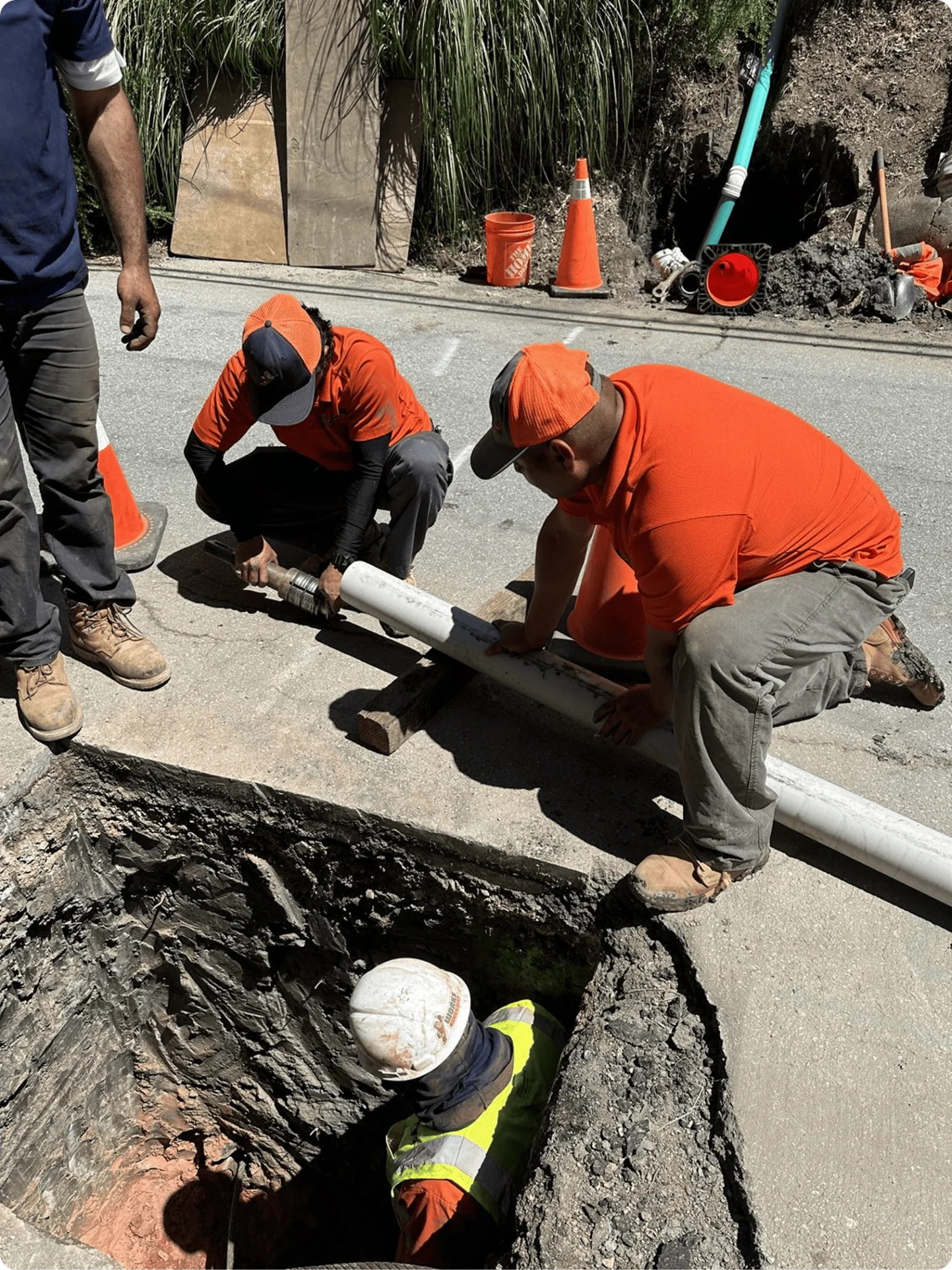
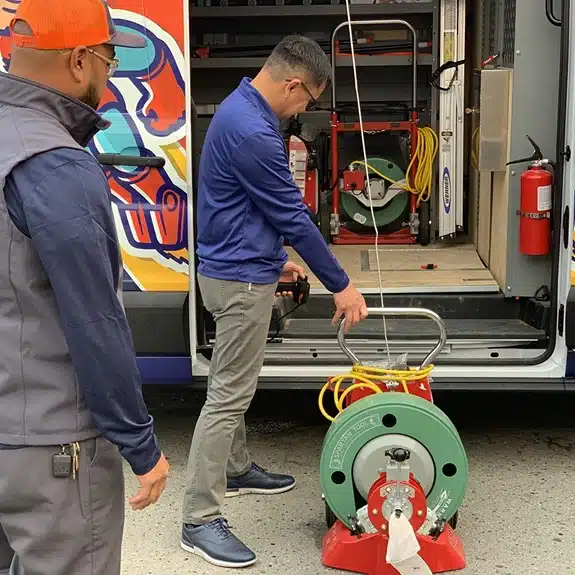
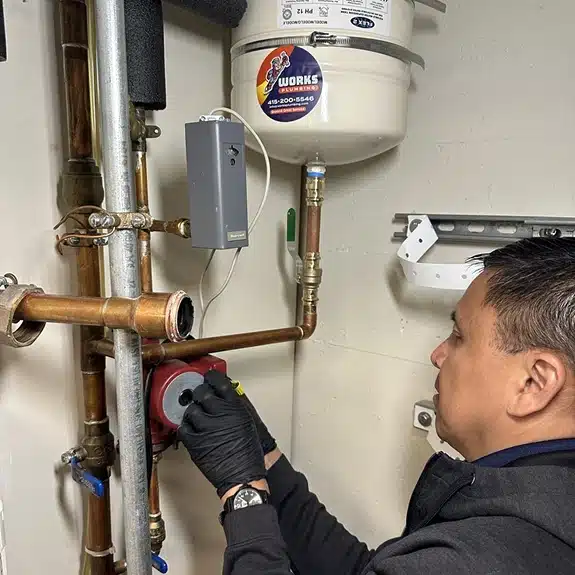
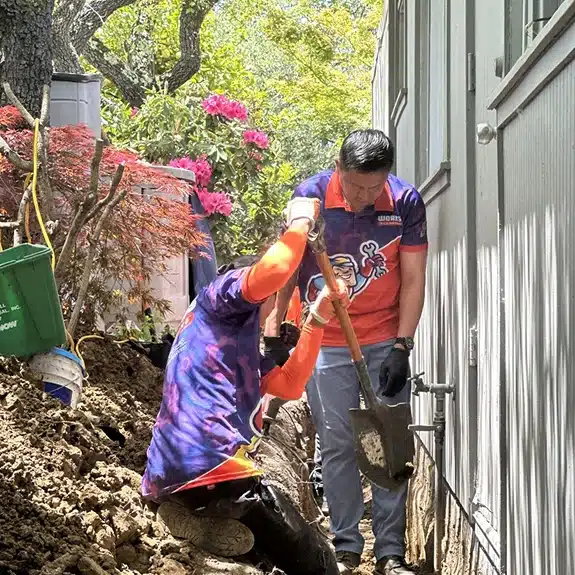
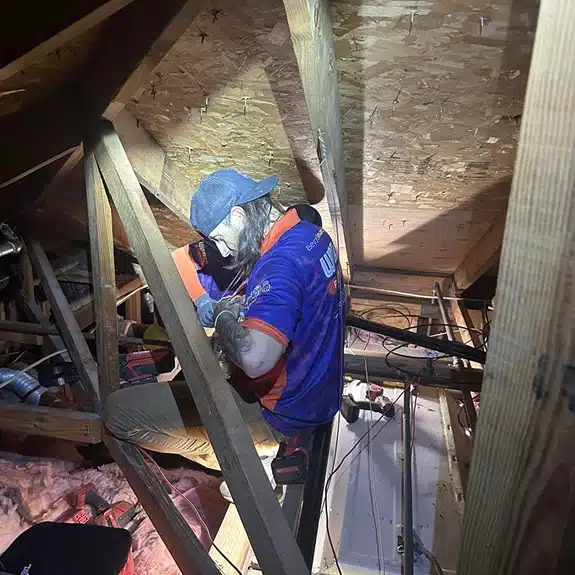
Our crew on a recent job across the Peninsula.
Why homeowners choose Works
Every job comes with upfront pricing, licensed and background-checked technicians, and a 100% satisfaction guarantee . No surprises, no pressure, ever.
Pro tip
Snap a photo of the problem before you call, it helps us bring the right parts on the first visit.
See how we handle it:
Ready to get it fixed?
Upfront pricing, licensed techs, and a real human on the phone 24/7 across the Peninsula.
Two Water Suppliers in Redwood City: Where Leak Detection Starts
Leak detection starts at the meter, and in Redwood City the first question is whose meter it is.
Most of the city receives water from the City of Redwood City’s own system, supplied by the San Francisco Regional Water System. Some addresses are served instead by California Water Service. Its Bear Gulch District 2025 water quality report lists its service area as Portola Valley, Woodside, Atherton, and portions of Menlo Park, Redwood City, and unincorporated San Mateo County. In 2025, all of Bear Gulch’s water was purchased from the San Francisco Public Utilities Commission.
The water is similar either way. The paperwork and contacts are not, and that shapes a leak investigation:
The meter. Each supplier owns and reads its own meters. We read the one serving your home for a baseline before we test anything else.
The bill. Usage history on your bill is our best evidence of when a leak started. Which bill you have tells us which records exist.
The boundary. A leak on the street side of the meter belongs to your supplier. A leak on your side is a private repair.
We at Works Plumbing confirm your supplier at the start of the visit. If the leak is on the utility side, we document it so you can report it to the right agency. If it is on your side, we keep going until we have the exact spot.
We’ve earned our reputation one happy homeowner at a time.
“Thank you again for another job well done, and thank you for responding right away. I will continue to recommend Works Plumbing because they respond right away and get the job done efficiently.”
DK
David K.
San Mateo Google Review
Google reviews
Yelp reviews
Pay Your Way
BIG REPAIR? SMALL PAYMENTS.
Plumbing emergencies don’t wait for payday. Spread your cost over 12, 24, or 60 months with affordable financing options through trusted partners.
A real human will answer, dispatch a stocked Works van, and get someone at your door the same day. No phone trees. No robots. No “we’ll get back to you Monday.”





 Google rated. CSLB #982663.









 TAP TO CALL • 24/7