For a trip of a week or two, you do not need to turn your water heater off. Lower the temperature or use the vacation setting instead. If you will be gone two weeks or longer, or you are shutting off the water to the house, turning the heater off completely is the better call. The details differ for gas, electric and tankless units, so here is how to handle each one.
The Short Answer by Trip Length
Heating a full tank around the clock while nobody is home wastes energy. The tank loses heat to the air around it, and the burner or element keeps firing to make up for it. That is why manufacturers suggest dialing the heater back when you leave. Rheem, a major water heater manufacturer, publishes guidance by trip length for gas units:
- A few days: lower the temperature or use the vacation setting.
- About a week or more: use vacation or pilot mode.
- Two weeks or more: consider shutting the unit off completely.
The savings from a full shutdown on a short trip are small, and a restart adds steps when you get home. For a long weekend, the vacation setting is the simple choice.
What Vacation Mode Actually Does
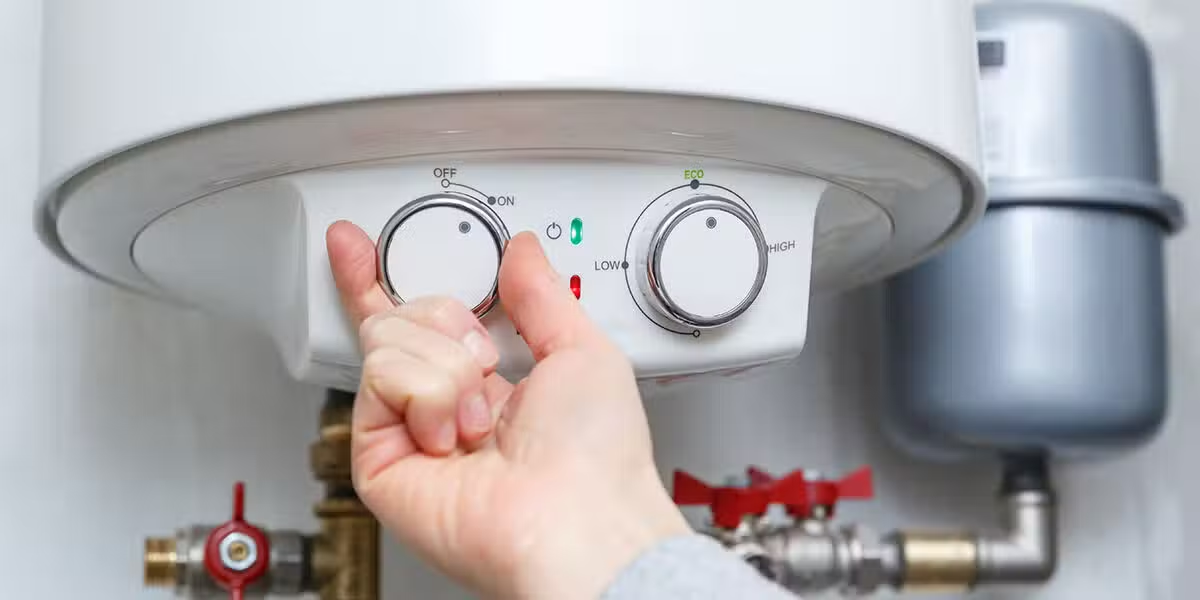
Many gas valves, and some electric and tankless controls, have a vacation setting. It holds the tank at a low temperature, or on a gas unit it keeps the pilot lit with the main burner off. You skip the relighting step, the tank stays ready, and you use far less fuel than at your normal setting.
If your heater has no vacation setting, turn the dial to its lowest point. Write the old setting on a sticky note and leave it by the heater so you can put it back when you return.
Gas Water Heater
On a gas heater, the usual steps for a long trip are to set the gas control to OFF, then close the cold water supply to the tank if you are also shutting off the house water. Rheem notes that a full shutdown saves the most energy but means you must relight the pilot on return, and that sediment can settle, so a tank flush may be worth doing. Closing the gas supply valve to the heater is optional for most people. Consider it for absences of several weeks.
Relighting means following the instructions printed on the heater. If the pilot will not stay lit, or you smell gas at any point, leave the home and call your gas utility. Do not keep trying. Our gas line service page covers the gas side of the job.
Electric Water Heater
For an electric tank, the cleanest way to turn it off is the dedicated breaker in your electrical panel. Turning the thermostat down also works for shorter trips. The key rule: never leave the breaker on if the tank might be empty. Electric heating elements are built to sit under water, and powering them dry can burn them out. If you plan to drain the tank, or you know it leaks, switch the breaker off first.
When you return, make sure the tank is full before you turn the breaker back on. Open a hot tap and let it run until water flows steadily, then restore power.
Tankless Water Heater
Tankless units do not store hot water, so they have no standby loss. There is little to save by turning one off for a short trip. Some owners switch off the power to the unit or use a vacation setting if the model has one. Check your owner’s manual first. If your tankless heater is due for service, a trip is a good time to schedule it. Our tankless water heater page covers what we work on.
If You Are Shutting Off the Water
Many people close the main water valve before a long trip to limit damage if a pipe fails while they are away. If you do that, turn the water heater down or off too. This is the most common reason people ask whether the heater should stay on when the water is off, and the answer is to dial it back or shut it off along with the water.
The reason is practical. With the supply closed, a leak at the tank or a nearby fitting can leave the heater running with less water than it needs. Shutting off both removes that risk. If you have an older tank, check it for corrosion before you leave. Rheem’s pre-trip list includes inspecting for leaks or corrosion and checking the venting and clearances. Along the coast, salt air can speed up corrosion on tanks and fittings in garages and closets, so that quick look matters.
Before You Leave: A Short Checklist
- Look at the base of the tank and the pipe connections for drips, rust or mineral crust.
- Check that the tank is strapped. California requires water heaters to be braced, anchored or strapped to resist falling in an earthquake (Health and Safety Code section 19211, which covers new, replacement and existing residential water heaters of up to 120 gallons).
- Set the heater to vacation mode or its lowest setting, or turn it off if the trip is long.
- Shut off the water at the main valve if you will be gone a while, and shut the heater off too.
- Note the old settings so you can restore them.
When You Get Home
Turn the temperature back up and give the tank time to heat. Run hot water at several faucets for a minute or two to flush out water that sat in the pipes and tank. Listen for odd noises and look for leaks while you are at it.
If the heater was off for weeks and now takes much longer to recover, or the pilot will not stay lit, have it inspected. Older units can have trouble after a restart. Rheem suggests evaluating a replacement if an older heater becomes unreliable after restarting.
Frequently Asked Questions
How long can a hot water heater be turned off?
A tank water heater can stay off for weeks or months without harm. The concern is the water and the restart, not the heater itself. Flush the tank if it has been off a long time, and relight or re-power it by the manual.
Is it OK to turn off an electric water heater when not in use?
Yes. Use the breaker. Make sure the tank is full of water before you turn the breaker back on.
Can I turn off the water and leave the water heater on?
It is better not to. Shut the heater off, or at least turn it to its lowest setting, whenever you close the house water for more than a short time.
Is it worth turning it off for a weekend trip?
Not really. Use the vacation setting or lower the temperature. The savings from a full shutdown on a short trip are small.
Need Help With Your Water Heater?
If your heater will not relight, leaks, or acts up after sitting, call Works Plumbing at 650-899-3542. We are a family owned, licensed plumbing contractor (CSLB #982663), open 24/7, serving the Peninsula since 2009. See our water heater repair service, or contact us to schedule a visit.


 Licensed & Insured · CA LIC #982663
 Open 24/7 · Mon-Sun
 Pacifica, San Francisco, Burlingame, CA · Serving the Bay






 TAP TO CALL • 24/7